Email outreach is one of the most widely used channels in B2B sales and lead generation. Yet many teams struggle to get consistent results, not because email doesn’t work, but because it’s often used incorrectly. This is where an email sequencer comes in.
In this article, we explain what an email sequencer is, how it differs from traditional email automation, and how to use email sequencing software properly to support real outbound conversations rather than spam.
What is an email sequencer?
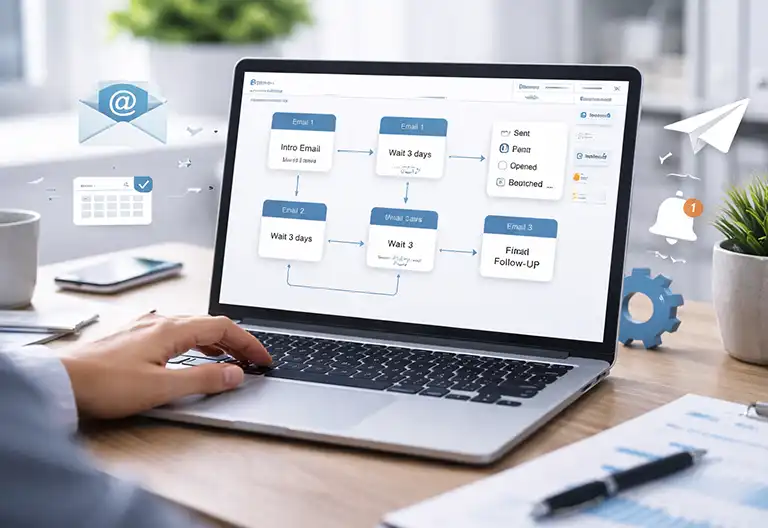
An email sequencer is a tool that allows you to send a series of emails automatically to a contact over time, following a predefined sequence. Each email is sent with a delay between steps, and the sequence can stop or change depending on how the recipient behaves.
In simple terms, an email sequencer helps you follow up consistently without manually sending each message.
Email sequencing software is most commonly used for:
- Cold email outreach
- Sales development
- Lead generation campaigns
- B2B outbound prospecting
Unlike bulk email tools, an email sequencer is designed to mimic human follow-ups rather than one-off campaigns.
How email sequencing works in practice
A typical email sequence starts with an initial outreach email. If the recipient does not reply, the sequencer automatically sends a follow-up after a set number of days. This continues for several steps until one of three things happens: the recipient replies, the sequence ends, or the contact is manually removed.
Most email sequencing software includes basic logic such as:
- Stop the sequence when someone replies
- Skip steps if an email bounces
- Pause or reschedule emails automatically
The goal of email sequencing is not volume. It is consistency. Most replies in cold outreach come from follow-ups, not from the first email.
Email sequencer vs email automation: what’s the difference?
This is a common source of confusion.
Email automation tools are typically built for marketing use cases. They focus on newsletters, customer journeys, and behaviour-based triggers at scale. An email sequencer, on the other hand, is built for outbound sales and cold email.
The key difference lies in intent and usage. Email sequencing software is designed for personalised, one-to-one outreach, even when used at scale. Marketing automation tools prioritise broadcasting and nurturing large audiences.
If your goal is cold outreach, sales conversations, or appointment setting, an email sequencer is the appropriate tool.
Why email sequencers are essential for cold email
Manual follow-ups are one of the biggest failure points in outbound sales. People forget to follow up, follow up too late, or stop after one email.
An email sequencer solves this by enforcing discipline. It ensures that every prospect receives the same structured follow-up process without relying on memory or manual effort.
From a performance perspective, email sequencing:
- Increases reply rates
- Improves consistency across campaigns
- Reduces time spent on repetitive tasks
Most importantly, it allows sales teams to focus on conversations rather than admin.
How to use an email sequencer properly
Using an email sequencer correctly is more important than the tool itself. Poorly used sequencing software quickly turns into spam.
The first rule is to keep sequences short. Most effective cold email sequences contain between three and five steps. Beyond that, engagement drops and deliverability risks increase.
The second rule is to vary the message. Each step in the sequence should add value or context. Repeating the same message with different wording rarely works. A good sequence feels like a natural follow-up, not a reminder that software is involved.
Timing also matters. Sending emails too close together feels aggressive. Sending them too far apart breaks momentum. Most B2B email sequences use delays of two to four working days between steps.
Personalisation and relevance matter more than automation
An email sequencer does not replace thinking. It amplifies whatever message you put into it. If the message is generic, automation will only make the problem worse.
Effective email sequencing software is used with:
- Clear targeting
- Relevant messaging
- A defined ideal customer profile
Personalisation does not mean adding a first name token. It means understanding why the prospect should care about the message in the first place.
Common mistakes when using email sequencing software
One of the most common mistakes is treating email sequencing as a numbers game. Sending more emails does not compensate for poor targeting or weak messaging.
Another frequent issue is over-automation. Sequences that run too long, follow up endlessly, or ignore replies damage trust and sender reputation.
Finally, many teams fail to connect email sequencing to a broader outbound strategy. Email works best when combined with other touchpoints such as calls or LinkedIn outreach.
When an email sequencer makes sense
An email sequencer is most effective when:
- You have a clearly defined audience
- You are running outbound or cold email campaigns
- You need structured follow-ups
- You want consistency without manual effort
It is less effective for one-off announcements, newsletters, or purely inbound communication.
Conclusion
An email sequencer is not a shortcut to instant replies. It is a tool designed to support disciplined, relevant outbound outreach. When used properly, email sequencing software helps teams follow up consistently, stay organised, and focus on meaningful conversations.
The key to success is not automation alone, but how thoughtfully the sequence is designed and executed. Used correctly, an email sequencer becomes one of the most reliable tools in modern B2B outreach. Try Sequence-r today